
Turn any podcast RSS feed into searchable transcripts, summaries, and episode chat.

No card • 10 free transcript credits
Sign up free with Google
Uncapped with Jack Altman
Uncapped #47 | Max Mullen from Instacart
Uncapped with Jack Altman

Uncapped #47 | Max Mullen from Instacart

Alt Capital 35m 9 days ago EN
Conversations with people I admire about things I’m genuinely interested in.

Topics & Mentions

Resources Mentioned

At a Glance

Jump chapter by chapter

Instacart's contrarian start and early operations

  • Investors often rejected Instacart because Webvan had already failed
  • Smartphones were critical for shoppers in stores, not just customers ordering
  • Max personally answered customer support calls and used that pain to drive the roadmap

Finding product-market fit through retailer choice

  • Early customers cared deeply about which store their groceries came from
  • Instacart bought one of every Trader Joe's product to create its catalog
  • Retailer-specific catalogs became a key inflection point for product-market fit

Growth levers: retailers, cities, and referrals

  • City launches required hands-on setup across operations, cataloging, and marketing
  • Chicago benefited from early adoption among business school students
  • A give-$10, get-$10 referral program drove a large share of early traffic

Building an operationally complex business and surviving Amazon

  • Instacart had to build for consumers, shoppers, retailers, advertisers, and logistics all at once
  • Amazon buying Whole Foods initially felt like an existential threat
  • The acquisition pushed many retailers to accelerate partnerships with Instacart

COVID, valuation swings, and the push to profitability

  • Instacart grew about 4x in 2020 and had to scale under intense pressure
  • Valuation swings and delayed IPO timing created emotional and cultural strain
  • Ravi Gupta helped turn profitability into a company-wide operating discipline

Staying focused and looking ahead with AI

  • Instacart repeatedly delayed international expansion to stay focused on the core business
  • Max believes the company avoided distraction by not rushing into second products
  • He is especially excited about Instacart's consumer-facing AI initiatives

What Max looks for in founders and how he thinks about investing

  • Great consumer founders often bet on ideas that look wrong before they look obvious
  • Max uses dirty white sneakers as a tell for deeply committed builders
  • He divides company decisions into science, art, and religion to guide when founders should take advice

Workshop and building around founders in San Francisco

  • Max wants to help founders without overwhelming them with advice
  • He built Workshop to work alongside founders in person
  • He believes San Francisco remains the best place to build a startup

Show Notes

Tap timecodes to jump
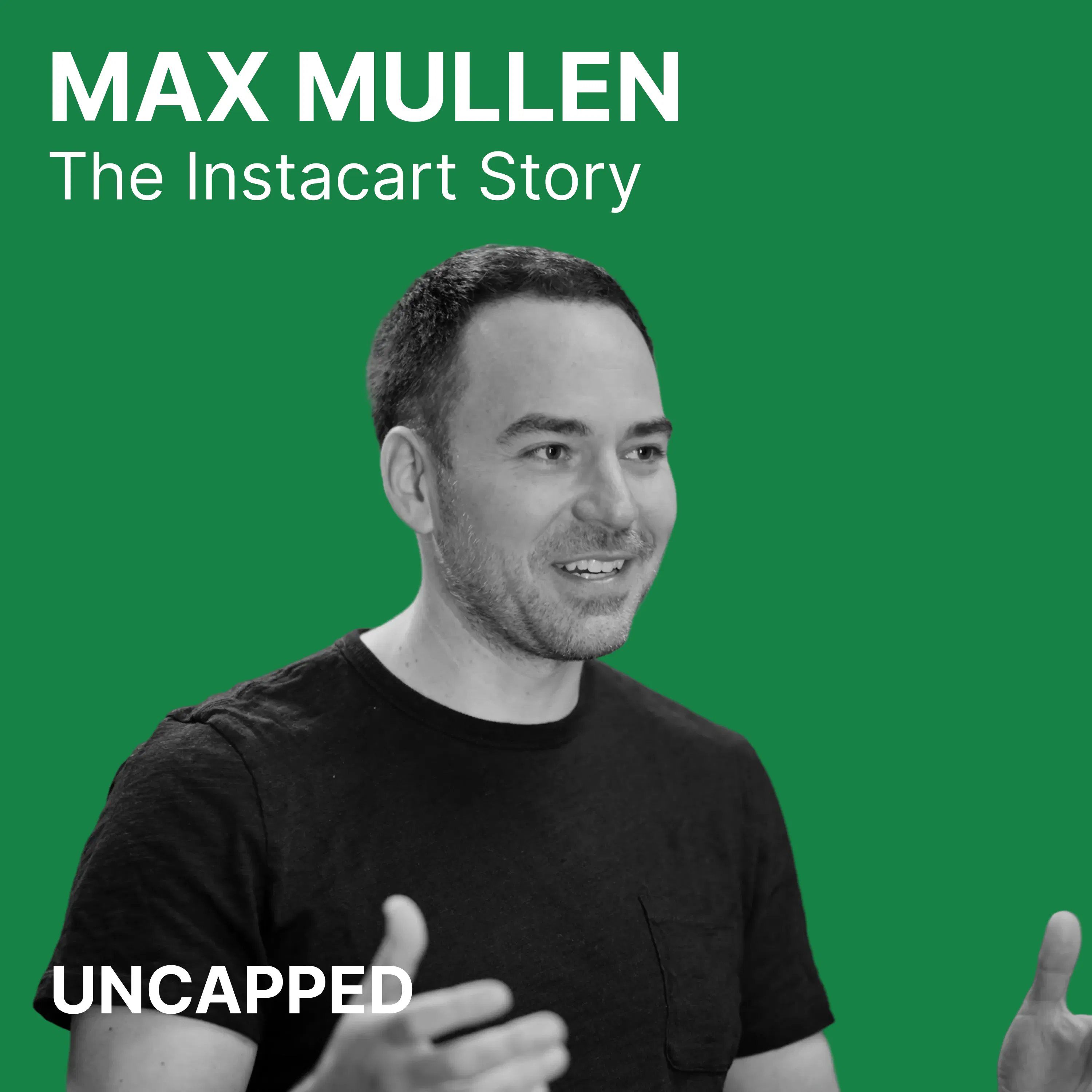
Max Mullen is the co-founder of Instacart and an active investor having invested in 100+ companies including Gumloop, Mercury, Owner among others. He also runs a founder community in San Francisco called Workshop.
We discussed the full arc of building Instacart from a contrarian idea that investors rejected to a $10B consumer marketplace. Max highlighted the scrappy early days, marketplace product-market fit, and key inflection points like retailer partnerships and the Amazon–Whole Foods moment. We also explored what makes great consumer founders, why the best ideas look wrong at first, and how to build and scale in “hard mode” markets. Finally, the conversation touched on investing, decision-making frameworks, and what it takes to win in consumer over the long term.
---
Timestamps:
() Intro
() The inception of Instacart
() Finding product market fit
() Landing Trader Joe’s
() Big levers for growth
() Operationally complex businesses
() Amazon’s acquisition of Whole Foods
() COVID and Instacart’s IPO
() Prioritizing profitability
() Avoiding temptations
() The future of Instacart
() Investing in consumer
() Irrationally optimistic founders
() B2B vs consumer founders
() How to work with investors
() Building Workshop
---
Links:
---
friends@uncappedpod.com

Transcript

0:00 Link copied!

And I look at their sneakers. If you're looking at a founder and and they got dirty white sneakers on, people that are busy building, they're locked in on their companies, they're sleeping at the office. Right? They don't have time to buy nice sneakers. Right? They just put on the same pair of sneakers and they get dirty. And, like, the real builders, you know, they sort of just they look the part. Alright. Max, I'm very excited for this one. I love doing this with close friends. As you know, we've had some other ones on the show. And one of the things I was just sharing to you is we've hung out a million times, and we barely talk about work. I barely know what you do. So I'm excited to learn about your work along with the rest of the audience. Well, thank you so much for having me, Jack. Let's start with Instacart, because you obviously just completed, you know, sort of the end to end dream of any entrepreneur. And then I want go into sort of your investing and some of your other work. But starting with Instacart. And I don't even know all these stories, which I really should, given how much we've hung out. Can you talk about Instacart getting started? Like, the early days, the idea coming together. I know this is YC, like, back in 2012, right? So tell me about the beginning. I'm so fortunate to be able to be a founder of a consumer company, because it's like a household name, and everybody knows about it.

1:09 Link copied!

I And use it like seven times a week. You really do order a lot. You probably know what I eat too. I do not look at customer accounts. Could you if you wanted to? I I can't. No. Okay. You probably could. But but what's great about being a consumer founder is is that, you know, everybody knows kind of what you do. You don't need to repeat yourself anymore when you're pitching the company. And that wasn't the case in the early days. Right? In 2012, grocery delivery was basically something that didn't exist in The US. It was quite a contrarian idea back then to have an app. Well, actually, it's even more contrarian because didn't people try it in, like, Web one point o and it was like a big high funded failure? Yeah. There were some spectacular failures in, like, the .com Like hundreds of millions went in and it didn't work. Yeah. Sequoia invested over a billion dollars in a company called Webvan. Yeah. And it failed. And that was 10 earlier before we started. So did you have that when you were talking to was that like the big thing when you were talking to investors was like, this has been tried, it doesn't work? Yeah. That was the elephant in the room. Yeah. And most investors totally turned us down because they thought that it would not work again. And so what changed? Okay. So a bunch of things changed, obviously, from the .com boom until 2012. First, more people were on the Internet, and those people were more accustomed to ecommerce. Right? So in 2012, there was lots of e commerce going on, but nothing in the grocery industry. And the other thing that changed is that we had smartphones. Right? And so on the supply side, the shoppers could have a smartphone that could help them do this work and, you know, had GPS and could help us make this an efficient marketplace. The shoppers part was the key. I think a lot of people think about it as like, I'm gonna order from my couch on the phone. But it's really the shoppers who are in the store needing the application. Yeah. And the idea of using stores as warehouses was also new. Right? Most people who had tried to do grocery delivery tried to build big warehouses, buy trucks, and it was very expensive. And we didn't do any of that. We just went into the same grocery store that you would and shopped just like you would and delivered just like you would. You know, obviously, this was, like, hard to raise money for, but you still got into YC, you were still able to raise capital.

3:09 Link copied!

But like, you still then had to like start a marketplace, and you still had to like get apples, you know? Like, so what did you do to actually get this thing started? Like, you know, day one you had nothing. Day two, what did you start doing? We sort of always had the company launch, like, from almost day one. So we had a not very well designed app and a not very well designed shopper experience. And we sort of just put one foot after the other, trying to, like, build from a very small base of customers to a little bit larger and a little bit larger, and try to pay attention to both the demand side and supply side at the same time. So, like, who's the very first customer? Like, or, like, what is their experience? Honestly, the very, very early customers, a lot of whom were RYC batchmates, probably placed orders that never arrived or were really late or didn't contain all the items. It's a human business. Right? There's a lot of processes involved and mistakes. And every week, we would try to make these metrics go up. Right? Percent of late deliveries would go down, and number of deliveries per week would go up. And the percent of your items that were delivered perfectly, found rate, would go up. And just we would, every week, try to push those metrics up and just make little tweaks to the software to make that happen. Did you ever shop? I still shop. Really? Yeah. I still have a shopper credit card. But you go fulfill orders sometimes? Occasionally. Yeah. It's really fun, and it's super hard. Is it hard? It is really hard. Yeah. What's it like? Well, first of all, when you're shopping for yourself in the grocery store, you know exactly what you want. And if something's out of stock, you just make a quick replacement, and you're you're good with it. Right. But when you're shopping for someone else, it's kinda hard to understand what their intent is. You also don't know if they're gonna be happy with the different chips or if they're be really pissed because they wanted lemon lime. Right. Or do they want a bigger size of a same brand or a smaller size of the, you know, different brand? Yeah. Yeah. Yeah. It's a judgment call. Yeah. But then, I mean, you can ask questions in it. You can. Sometimes customers are really responsive, sometimes they're not. Yep. Okay. So you get all these initial pieces going. You know, you start kind of improving it consistently. Yeah. And very importantly, we were doing I was like doing all of the customer support myself. So customers would call Instacart's phone number and it would ring my phone. So the pain of anything that was wrong with our service was personally felt by me Yeah. Basically seven days a week. And then I would go and make the roadmap and fix those problems so that I didn't have to get those calls anymore. How pissed do people get? Like, is it like an emotional thing for people who like, hey, my burgers aren't here. It really depends. You know, every customer is different, and it really depends. Sometimes people are buying, you know, things for their office. They're more chill. You know, if you're buying a rack of lamb for dinner and it needs to arrive before five, otherwise, dinner's gonna be late, then you'll be really upset if it doesn't arrive. Actually, later I wanna ask you about fast delivery and some other adjacent markets that I know you've thought about and done work in. But I'm still interested in how you actually got this consumer marketplace going because they're so hard to get going. So did you feel pull immediately, or was it the kind of thing where in order to get strong product market fit, you needed to add suppliers and selection, and it didn't actually cross until you had more and more products in the catalog? My belief is that product market fit is like a spectrum. It doesn't just happen in one moment. And so the early days of Instacart, we sort of thought we had product market fit. We had a lot of pull from customers who wanted deliveries of groceries that were quick, but they didn't really care from what store. Our initial product was basically all coming from one conventional grocery store in San Francisco.

6:23 Link copied!

But a real product market fit was really from families. And that only happened later when we started adding retailers and their full catalog to the platform. Why was that important? I mean, you don't wanna buy groceries from a warehouse. You wanna buy groceries from Sprouts Yeah. Or from Buy Right Market. Right? You have a really strong loyalty toward the grocery stores that you already shop at, and you wanna get delivery from those on Instacart. How did the business, like, itself work in the early days? Like, I imagine it could not have been great margins when you were getting going. Because you couldn't, like, charge $7 for an orange, but you still had to go, like, send somebody to go get the orange and bring it and all of that. So were you, like, running, like, on wire at the beginning? Like, what did it look like at first? To be quite honest, at first, we weren't very good at tracking our unit economics. Like, I don't know. Yeah. And we were definitely losing money, but it was a little bit unclear how much money. Yeah. Our primary goal was just to get more deliveries and higher quality deliveries and more customers. And we knew that we could achieve positive unit economics later, but it would take, you know, a lot of work and bigger scale. Zooming forward a little bit. Were there, like, landmark partnerships, grocery store deals, like, that, like, really inflected the business? And could you, like, talk through, you know, an example, like, end to end? Yeah. I mean, the first thing is we didn't know how important retailers were.

7:37 Link copied!

And in the early days, we asked our customers, you know, what can we do better? What can we do differently? Because at first you were not shopping from a grocery store. At first, we were always shopping from a grocery store. But at first, you went on Instacart and you saw a catalog, and we did not tell you where the groceries were gonna come from. Yeah. It's like, want some strawberries. Where are they from? You're like, don't worry about it. And our idea was gonna be, we'll get them from the cheapest, closest store. Yeah. Right? People won't care where the strawberries come from. Right. And so we asked our customers, and they told us, we love Trader Joe's. We want only to shop at Trader Joe's. So we went on this mission to try to figure out how can we partner with Trader Joe's. Right? And we couldn't get in touch with them. We tried everything. And at a certain point, we went to the store, and we looked around and we said, well, maybe we can just shop out of a Trader Joe's without a partnership. And in order to do that, we would need a picture of everything that they sell. And so we asked the manager, can we get a picture of everything that you sell? And they said, absolutely not. We don't have that. We can't give that to you. And I said, well, what if I took my own pictures? You know, I'll do it in the corner of the store, or let us take some items out of the store into the parking lot, and we'll take some photos, and we'll bring them back. And they were like, no. No. No. And so we came back, actually. And we said, what if we bought one of everything in the whole store? And they were like, that would be great. Come on a Thursday when it's slow. And so we said, okay, great. We'll be back on on Thursday. And I went to that store with a bunch of other people over three days, and we bought one of every product in the entire Trader Joe's. How much was that? $20,000. That's okay. Yeah. Not too bad. Yeah. We had just raised the money from, you know, from demo day. Yeah. So we had a couple million bucks in the bank. We ran this experiment. We made the catalog of every Trader Joe's item. We launched it on instacart.com. And at that time, we had to add, like, a toggle. Right? So now instead of seeing no retailer names, you would see Safeway or Trader Joe's, and you could switch between them. Mhmm. And that was the moment I think we started to really find marketplace product marketing. That's interesting. It's crazy how I mean, Airbnb had something similar where once they got good photos, it's like, you know, it was worth it to them to go do super manual things, apparently. Yeah. And you have to sort of roll up your sleeves and go do these crazy things to get the first customers to be really excited to tell their friends to get the next set of customers, you know, just to get one city going. Once you had that understanding, did you then shift a bunch of the company focus to going and getting more retailers?

9:51 Link copied!

Yeah. We did this with, you know, Whole Foods and Costco and sort of a bunch of other retailers. And of course, we eventually got to the point where we struck partnerships with those retailers. And then they would give us their catalog data, or they would at least let us in their stores to photograph it carefully. What was the argument that you needed to convince somebody like a Costco to serve products with you? Well, we're, you know, few people in San Francisco. We're a startup. No one's ever heard of us, you know. So it's tough to strike a partnership with a really big public company. Well, because also I assume the deal is, you know, we're just gonna come buy from you. Maybe we're gonna cannibalize some of your online sales. I don't really know, you know, how the math works out, but I assume that there might be some idea of them thinking, no, I should just own this channel directly if I can. Honestly, back then, it was a bit more of lack of awareness. You know, retailers didn't understand how important sort of e commerce was gonna become, and they didn't have a good strategy yet. And in fact, retailers pay Instacart, right, a commission for bringing them Right. Well, now you have all the traffic. Yeah. More growth. Yes. And at some point that flipped where you're like, hey, I've got the traffic. Now you can command a different sort of price dynamic. And at first, we started with little local retailers, you know, Buy Right, Rainbow Grocery right over here. And they were thrilled to partner with us. And then eventually, we kind of got to the bigger sort of Whole Foods markets of the world. What were your levers for growth other than I mean, so it sounds like adding retailers equals more growth in Yep. What else were the big levers? Mean, I gotta assume price. Geographic expansion. Geographic expansion. Another big one. Right? Like, we learned how to launch new cities. We launched Chicago. We launched Boston. We launched Washington, D. C. We launched New York City. How do you launch a city? Oh, man. At first, I just went there with an engineer, and we would, you know, catalog the stores, make sure that our sort of our operations were set up correctly to understand the sort of borders of the city and the ZIP codes that we could serve efficiently. We'd hire shoppers and hire operations folks to sort of get things going on the supply side. And then we'd do demand side marketing and kind of try to mash those and grow those. What worked? Man, I mean, I think there's at first, in 2013, when we first launched, you know, the first city outside of San Francisco, which was Chicago, luckily, had a girlfriend there who's now my wife, and she was going to business school. And so we got all the business school students, all the MBA students at Chicago University to become customers. And they told their friends. We threw events. We did PR.

12:10 Link copied!

And there was something, like, novel. There still is actually something novel about putting in your grocery list. Oh, yeah. And then in an hour, it all just shows up. I get a rush every time. And so we would try to use that. Yeah. We would try to use that. As you know, you know what I'm you know what the fuck I'm I'm ordering. Yeah. You what the See? That's what I told you. No. Yeah. That's what I thought. I don't judge. Okay. So there's that. So there's there's geographic expansion. Was price a big lever? Like, was it the kind of thing where you're like, I change these prices and I just like, know, am I playing with that tool carefully, or is it not that big of a deal? Yeah. I mean, retailers set prices, but we make delivery free. You know, we offered an annual membership that we sort of discounted and would give free trials of Instacart plus Did you all do referral programs? Absolutely. In fact, I designed this killer referral program that was like a third of our traffic in the early days. When I first moved to San Francisco in like 2013 or something like that, I was, like, doing these crazy Uber referral. I was like an Uber referrer. Like, I was deep in there just doing paid marketing for Uber to get more drivers, and it was great. And I said, was Just for fun? No. Yeah. I got Uber credit. Oh, nice. Yeah. It was great. I think they'd stopped it at some point, but it was great for a little while. So, you had those referral programs going for shoppers? We had Or for customers.

13:17 Link copied!

Right. Like, the key thing we figured out is that after your first order, right when you placed it, but before it was delivered, you were really keen to share the service with other people. And so we would have this give $10, get $10 offer, or we would change those values to play around with them and experiment. And that got a lot of people to share with their friends. When I think about the overall story of Instacart, obviously, you needed a nice piece of software, too. But a lot of this is building a business in terms of, like, partnerships, business development, you know, the hard work of city expansion, boots on the ground, hiring people. Is that common? Do you think like, do you think a lot of consumer marketplaces are more require these other components besides just the technology more than, like, B2B companies? There's some consumer and some B2B marketplaces that are what I call operationally complex. And ours is, like, probably hard mode, like, extra hard mode. If you think about it, there's the consumer app, which, of course, you know, as a consumer who orders a lot of ice cream. Yeah. There's the shopper app. Right? They have to have an app that's beautiful and works really well and is performant in, like, low Wi Fi situations in the back of a grocery store, has all the photos of all the items. We have a huge ads business. Right? We're partnered with almost every consumer packaged goods company in The US and Canada. And then we have the retailer component. Right? We're delivering enterprise grade software to retailers. Yeah. That's a lot. Then we have a logistics system, right, that routes in batches, orders, and we have lots more stuff, analytics. There's so many facets to the business. Right? You know, that's uncommon. A lot of the business models that, you know, you and I invest in are, like, pretty much the SaaS business model or sort of AI applications. A lot less complicated. And so I think it's not for the faint of heart to try to build such a complex business. Yeah. Talking about other, like, hardmoon moments, Whole Foods was obviously like a big customer of yours. I remember one day I was shopping with Whole Foods, and then one day we're not.

15:05 Link copied!

Can you talk about, like, what happened there? What it meant for you? Like, how it sort of affected the company? So the company's chugging along, and we're signing retailers. And we signed this big long term deal with Whole Foods Market, which is not the largest retailer, but a really important one from a brand perspective. Seven in the morning, I get woken up one morning in twenty seventeen, and we find out that Amazon has bought Whole Foods. Now Amazon, you know, is our biggest competitor. They're really focused. They have been working on online grocery for decades, and they have essentially infinite resources. And Whole Foods Market is our biggest client in terms of, you know, the number of orders that we send them. And so this is kind of an existential crisis Yep. For the company. And then the headlines started coming out, you know. Amazon buys Whole Foods for $13,700,000,000. Amazon buys Whole Foods. What does it mean for the grocery industry? Yeah. Amazon buys Whole Foods. Will Instacart succeed or fail? Yeah. It's crazy. Amazon buys Whole Foods. Instacart's toast. Yeah. And we were, like, kind of freaking out. Right? And so what do you do? What do you do when you get hit with something like that as an early company? We had an all hands, and we declared war time. And we, you know, realized that this was gonna be not a terrible thing for the company, but but a dynamic situation we could kinda make the most of. Every other retailer saw this news as well, and they were asking questions like, what is our ecommerce strategy? You know, what are we gonna do now that Amazon has entered our industry? And we used that to our advantage, and we reengaged with, or they reengaged with us, almost every retailer that we hadn't signed yet. You're like arming the rebels. Yeah. And we really, you know, used that wartime crisis moment inside the company to motivate people to work extremely hard and extremely fast, and with retailers to kinda get them to finally come aboard. And in the eighteen months after that happened, we signed basically every major retailer that had been a holdout, including, you know, Costco and Kroger and others. And you think those wouldn't have happened without it? Certainly not on that timeline. Wow. So, the net effect might have been positive. Absolutely. It was one of the best things that ever happened to the company. One of the scariest things. It is crazy how, like, when something like that happens, it's a good reminder that you can't always know whether some piece of news is good or bad. One thing's for sure. If you start a company and it takes a really long time to build it, you're gonna face luck of some kind. Yeah. Good luck and bad luck. And great companies figure out how to take those moments and kinda flip them and leverage them. Totally. And, you know, also when things that could be potentially bad for the company kind of happen Yeah. You gotta, like, have a thicker skin. Yes. You you gotta you gotta become antifragile. And for sure, Instacart is what I would call an antifragile company. Things happen, and we don't get worse. We don't stay the same and just repair. We get stronger. Right? People get emboldened, and we get galvanized, and we go off and do amazing things. I mean, another one that kind of comes to mind that is both it's like a champagne problem is Instacart's like a $10,000,000,000 public company, which is like a remarkable achievement by any standard. There was one venture financing that was at like 40,000,000,000.

18:04 Link copied!

Yeah. And a lot of companies, when that happens, that like ends up killing them and they can't get through it and it creates all these issues. But you got through it, you got public, you're now you know, it's a public decacorn. And that's amazing. And who know, some level it's okay that that you know. Can you talk about like that journey too? Because I'm sure that didn't feel good at every moment, and there were probably some cultural things you needed to work through and all of that. Yeah. It sort of starts with the beginning of COVID. Right? COVID happened. Our business sort of It went went nuts, right? Yeah. Yeah. I mean, we grew like 4x in 2020. We were suddenly remote. Right? And we had to scale the company. And even with hiring more people, everybody was working seven days a week, two stand ups a day, just trying to keep the business afloat because there's so much demand. I mean, talk about COVID beneficiary. People just like not want to go to the grocery. You can't Yeah. And like, even my own parents, right, obviously, they're super fans of Instacart. But they were, like, using Instacart sometimes and going to the grocery store sometimes. And then during the pandemic, they completely switched. And then you build a habit. And it lasted long enough that people built habits. Yeah. Like, you acquired users, they We've never had a down year. But that's a challenging thing. And sort of not being able to forecast what the next year and the next year were gonna look like, and especially during 2021, you know, the way the markets were. Right? So our valuation kind of went up and down, and this whole thing looked like a roller coaster. It's emotional. You know? People get attached to the value of their shares, and people thought that our IPO timeline was gonna be one thing. And because of the markets, it had to shift and happen later. And we had to manage through all of that. Also, you know, it was it was a new era of the company. Right? Up until that moment, almost everyone that joined the company was joining a company that wasn't yet really a household name. Right? Kinda had to squint to believe that we were gonna do all the crazy things that we were that we said we were gonna do and achieve the scale that we said we were gonna achieve.

19:52 Link copied!

After COVID, it was pretty obvious. Right? Instacart was on a great track. And so different types of people were attracted to the company at that point. Yeah. And we sort of had to manage through the change in culture that was necessary there. Obviously, now you're a profitable company. At the beginning, you talked about we didn't even know what our margins were. Let's just pretend they were definitely super negative. When did you sort of, like, go through that cultural journey of like, this is gonna be a profitable business now? So, two and a half years into the company, we raised a round of financing that valued us at around $2,000,000,000. And that was sort of the beginning of us growing up as a company. We hired this guy Ravi Gupta, you know, who then became a partner at Sequoia and is still on our board. And he was like the first, you know, adult in the room, let's say. And after a few months of joining, actually, really after like a week or two of joining, he looked at our financials, and he was like, guys, I don't know if you know this, but we're losing a lot of money on every order. And we were like, yeah, we sort of know, but, like, how much money are we losing? And we sort of quantified it. And we realized that as good as things were going, you know, the company was growing very fast. And if we grew fast as we were growing All the money was gonna be gone. You might run out of money. And so it was kind of epic, but Ravi had this all hands at Instacart in his first few weeks. And he put up a slide. And he said, okay, We spend $25,000 a month, let's say, on blue bottle cold brew in our in our fridge. For that amount of money, we could, like, lease a Tesla for the company, a few Teslas. Right? We could have a fleet of Teslas. That'd be cool. Right? Or for that amount of money, we could, let's say, acquire 5,000 customers, or we could acquire a thousand shoppers. Right? And he asked people to raise their hands. Who wants to acquire the customers? Who wants to acquire the shoppers? Who wants to buy a Tesla? Or who wants to have blue bottle coffee? That's good. And of course, everybody realized that, you know, the company was probably spending too much money on some silly things. And so we made some changes. We cut some things like that. More importantly, like, we taught the company this object lesson about being more resourceful. So, what went into that from there? That's like a moment where you, like, galvanize everybody and you're like, hey, we care about this now. But what do you need to change besides the blue bottle? Not buying blue bottle coffee, as painful as that was, was the object lesson. But then the attitude we all had to have was we all own some little slice of our P and L. Right? This team works on taxes. That team works on bottle deposits. This team works on batching efficiency. And everybody was responsible for 5¢, 25¢, $1 of the bridge from negative $15 of unit economics to neutral gross margins. And we had to do it fast, right? Because otherwise we would literally go out of business. And so that put this really big pressure on all of us. And it was hard. You know, we had a lot of arguments about what to cut and what not to cut. And every team, everyone in the company was involved in this initiative. And we set a goal to become gross margin profitable. And we started to make little bits of progress towards it. And then big, big wins would happen. Right? And we would figure something out. We would change prices in this city that was more expensive, and we would take away some marketing thing we were doing that wasn't working. And we slowly got the company margin positive. And then we threw this wonderful party, which was, like, everyone who was there remembers this. We threw, like, a very resourceful party. Like, we didn't spend any money on the venue. We had it in our in our office. Just, like, turned on the music, and then we got dollar hamburgers from McDonald's. So we got, like, $301 hamburgers and, like, very cheap champagne from Costco. And we just had this, like, big huge celebration of this crazy win That's awesome. As a company. I'm also curious about, like, some of the decisions that you decided not to do. I'm kind of coming to this from a lens of, like, it's always in these sort of retellings of history. It's easy to focus on, like, the amazing decisions you did make. There's also a lot of, like, decisions you decided actively to not make that, like, might have been big blunders or distractions or whatever. I'm just curious about, like, what are some of the temptations that you avoided? And I'm thinking about, you know, Internet. And maybe there's things that you didn't do at one moment, but later it was the right thing to do. Maybe it's international, maybe it's rapid delivery, maybe it's new products that you would like offer to consumers. Like, what were the things that, like, were hotly contested that you decided to hold off on? In every company, there's like this should we build our second product question, or should we focus on the first product more?
24:07 Link copied!

And we, for a long time, thought about international expansion. We thought about other products that we could do. We kept realizing that just focusing on The US and focusing on our core business, which we still weren't done with, was a better use of resources. We kind of kept the main thing the main thing for a really long time. I think that was the right decision, but there was, you know, every year there would be different debates about international expansion. And now thirteen years after we started the company, we are an international company, and we are doing it. And it's, you know, not too late. Is that the right idea at the wrong time is the wrong idea kind of thing? Yeah. You also, I'm sure, could have considered just like acquisitions to those things. I'm sure you looked at considering doing that. Did you end up deciding that it's just complicated? We looked at acquisitions and still do, but we just I think we realized there weren't just the perfect company to acquire in most of the places we want to be. Yeah. Thanks for sharing so much of that story. It's cool for me to hear because I haven't even gotten to ask you all those questions despite knowing you so well, and it's just an amazing accomplishment. Maybe before we move on to the next topic, I'm interested in what you're most excited about for Instacart going forward. Obviously, there's just gonna be, you know, it's a great business as it is, but, like, what are the things that you're, like, excited to see? The last thing I worked on at Instacart was a bunch of our AI initiatives.

25:14 Link copied!

And the company has really embraced AI, you know, both internally and using it in in our products. And we're just now launching, you know, some of the first consumer facing agentic AI products that I worked on. And so I'm very excited to see those roll out. I just think that every consumer app in the near future will have incredible features where you'll be able to push a button and have magical things done for I you to integrate with a home robot that cooks, and I just wanna tell the robot that I want dinner. I don't think that's that far into the future. That's what want. And I think Instacart will be a key part of getting I asked Kyle Voat this when he was on the show, about cofounder. Yeah. And I was like, could that happen? He's like, I think it could happen. So, you guys need to partner. I love Kyle, and I think we should do it. I wanna talk about, obviously, you've been, you know, a great angel investor for a long time. Now, you're, you know, gonna be You are a full time investor. I want to hear your opinions on consumer in general. And I feel like there's been like there's like always these memes about like consumer is dead, it's so hard. Obviously, there's some like amazing runaway consumer successes, but they are few and far between compared to B2B. But I'm curious just to hear from you as someone who's done it and has, like, lived it kind of the building blocks of a good consumer business.

26:20 Link copied!

Maybe start with, like, the founder. Like, what makes a good consumer founder? I think to be a good consumer founder and to build a really big sort of consumer company over the long term, you have to have some view on consumer preferences. You have to kind of see the world through a younger generational lens. Usually, that means an idea that looks contrarian today, that has some sort of stigma associated with it, where most consumers would say, that's not for me. But that you see that in the near future that stigma is gonna lift. Mhmm. And that as that sort of Overton window moves, you go from looking contrarian to consensus. Right? You wouldn't stay in the spare bedroom of a stranger twenty years ago, and then Airbnb made that a normal thing to do. You wouldn't get in a stranger's car, and then you had Uber. Having someone do your grocery shopping for you, it wasn't a normal thing, you know, prior to 2012, and then we sort of willed that into existence. And so you have to have this attitude of there's something I know is gonna happen in the near future. We are gonna build it so that when people are ready, the product will be there. You have to be right, and you have to time it perfect. So the idea almost has to be a little uncomfortable at first. Otherwise, you're in perfect competition. And by the way, there's really great large public consumer companies that will be would love to do the consensus things before startups can. Yes. And so you have to be a little edgy. Right? I gave some examples there. Mental health is something that had a stigma that seems to have lifted recently. Companions, AI companions, is something that today is very edgy, and then I think in the future will probably be more normal, and many people use those. Yeah. What else comes to mind for consumer founders besides this? So contrarian idea. And that means you also have to tolerate looking wrong and sort of looking silly for many years. You have to have a thick skin. You have to really have conviction and tenacity and not pivot. And then the third thing is you have to run really, really fast. Right? Once the opportunity becomes obvious, there'll be lots of competition. So you have to be way ahead, and you have to have a machine that can execute really, really fast and then, you know, build the product faster than anyone else. Like, I think there are no great consumer companies where there's not an extremely high sense of urgency in the DNA of the company. Yeah. I guess, generally speaking, if you had to, like, pick the thing that you're looking for when you meet founders, like, how would you name it? I mean, I'm always looking for people that are what I call irrationally optimistic, you know, that are just like so excited about their version of the future that they'll tell everyone about it and sort of attract talent that way. But, you know, investing at seed is really tough. Right? You just don't always know. And try to get in person with founders, and you try to figure out if they're the real deal and kinda like what their motivations are. And then at a certain point, I kinda started looking down. And I look at their sneakers. And it's the craziest thing. I'm giving away, you know, the alpha here. But if you're looking at a founder and they got dirty white sneakers on. Looking sneakers. Yeah. Perfect. You've dirty white sneakers on. You're a real builder. Right? You're in the arena. Yeah. And the reason why this is an interesting tell is that, you know, people that are busy building, they're locked in on their companies, they're sleeping at the office. Right? They're working out of a house in, you close proximity to their founder seven days a week. They don't have time to buy nice sneakers. Right? They just put on the same pair of sneakers, and they get dirty. And, like, I invested in a company that that Benchmark is an investor in, Gumlu. And one of the founders of Gumlu had such dirty sneakers. They were falling apart. Literally, they're like flapping. You're like, I don't need to hear anything else? No. First of all, obviously, I love the company and both founders, but but I I had to buy him new shoes. Right? Like like, his shoes were so bad. And so anyway, I've just found that, like, the the real builders, you know, they sort of just they look the part. I love that. What's different here versus, like, a b two b founder, if anything? You know, like, some of the stuff exists in b two b. But I'm curious, like, you know, you've also obviously invested in a of b two b companies. What's different? Like, is there some like, when you're meeting somebody on a b two b idea, do you think differently about any of those things you just said? Yeah. I mean, I think with B2B founders and B2B companies, you kinda need, like, a little bit more subject matter expertise. You know, you may not be the customer, and so you have to have lived the problem or know lots of the customers or sort of have deep, deep insights from having worked in in the space. Starting a consumer company, it really only requires those three things. Right? Like, you are a consumer. I'm a consumer. And if you have the taste, if you have the judgment, and you kinda know where people's ideas are going in the near future, you can build a consumer company without without much domain expertise. Yeah. This is a question that's relevant for you now as a full time investor. This is a selfish question for me.

30:40 Link copied!

When you think about the investors that were helpful to you, and, you know, on your whole journey through Instacart, the types of investors or the specific actions, like, what was genuinely valuable to you? We obviously have had some amazing investors at Instacart. And I think when you when you think about what founders get from investors, they get three things, in my opinion. Obviously, the capital, right, on some sort of terms that you negotiate. They get the help, and some investors are more helpful than others. And then they get the signal. And particularly for early, early rounds, right, I think founders underappreciate the signal. Having a great foundation of your company and having exceptional investors is gonna be something that follows you for the rest of your company. And every subsequent round, the new investors who are gonna issue a term sheet are gonna call the existing investors. Right? So you wanna have a great relationship with your early investors, and you want them to be high signal, awesome investors. Why do you think it's underappreciated? Because I think founders often negotiate a lot around the terms and valuation. And just the focus at the moment of the deal is the equity. Yeah. And, like, rather than that, the focus should really be like, who is gonna help me get from here to the next major milestone? And who is gonna help me raise the next round in terms of having a great signal? Right? Having Jack Altman invest in your company Stop. Is a way bigger deal, you know, at a certain stage than it is having just a party round of other random investors. And then, I mean, I assume implied in sort of the language you're using, at some point, it's not the most important thing. Like, once your company has its own big brand, it's like, your brand is bigger than your VC's at some point, and so it doesn't matter anymore. And I think you get people around the table and on the board that can help you in all the places you need help, and then the incremental next investor is maybe not as valuable in terms of help or signal Right. And more valuable in terms of capital. Right. It's like you'll need one or two of those. Yeah. And you gotta be careful not to take advice from too many investors.

32:26 Link copied!

I actually think that's the flip side, is you have too many people like that, you have too many egos around, like, that can also be a problem. And I have sort of a framework for founders on how to take advice or not take advice from investors. So you got three kinds of decisions in your company. Alright. Science, art, and religion. We're gonna put a little visual up behind you here. Great. Science, art, and religion. Science decisions have a right answer. Okay? Great. Get advice from investors on that. Either they've solved the problem themselves, or they're on five boards where those companies have solved the problem. Get the advice. Then you have art. Right? That's why you're a great founder. You have taste and judgment. Right? But you're inventing things. You're engaged in creative destruction. Right? Only you can make the art decisions. Those are the ones that don't have a right answer and where you're really generating sort of a new you're blazing a path. Right? You can't outsource that, and you can't get advice on that. Gotta hold that to yourself. And then there's religion. Right? This is how you work. Like, what kind of company do you wanna be? And there's a lot of right answers to that question, but it's a personal decision. And you ask yourself, what are my values? What are my cofounder or my early team's values? And then you make a set of values, and you sort of answer that question by looking at your values. Get advice all day long about science related things from investors, but on anything else, especially on sort of the taste type decisions, just ignore them. Yep. How does all of this make you think about, like, you as an investor and, like, what you wanna build and how you're doing workshop and all of that? I'm trying to be the investor that I wish we had when we were this this early, right, and help people in the first year of their companies. And I try to be very careful not to give too much advice, not to give advice on topics where I'm not an expert, and instead to help people network. That's good instinct, by the way, because a lot of people are like, hey, you founded Instacart, whatever you say I'm gonna run with. Yeah. I mean, if you're building an operationally complex marketplace, I have every piece of advice could no possibly matter how good your investors are, you should definitely not listen to a 100% of whatever anybody thinks. A 100%. Yeah. Yeah. And also, don't take a bunch of people's opinions and average them. That's also a bad way to go. That's a horrible way to go. That's awful. A lot of founders do that. Yeah, they do. Why are you building Workshop in the sort of, like, co working type of way? Like, why do you have a space for that? So I got a founder space.

34:30 Link copied!

I like to work alongside founders, you know, in person. And I just think San Francisco is the best place in the world to build a technology startup. It's crazy how it recent I mean, during COVID, we, like, almost lost it. I don't really think it was ever gone. I mean, I stayed and I You know I'm a big suburbs guy. Yeah. And I, you know, I'm a big city guy. And I think I think the city's great, and I think the founders stayed and new founders have come, and, like, it's really the best place to build. The funny thing I was realizing, you know, we've got this friend group and young people I've had on the show. And there was a point earlier on where both you and I were founders and a bunch of VC friends. And then a couple years ago, I became a VC, now look at you. It's just a crazy life cycle, isn't it? Yeah. It sort of gets everyone. Yeah. Are you excited for it? I love helping founders. And this is just like the best platform on which I can help founders. Yeah. So that's why I'm excited. Well, this was really nice to have a serious conversation with you for once. I really enjoyed it. Yeah. For once. Maybe we should do more of this. We should do more of this. This has been special. Alright. Max, thank you for doing this. Thanks, Jack.

Full transcripts, AI insights,
episode chat — free.

Sign up with Google in one click. 10 unlock credits included. No card needed.

Google sign-in · No credit card · Cancel anytime